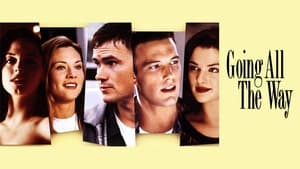
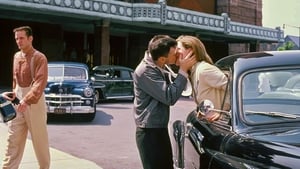
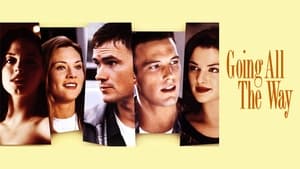
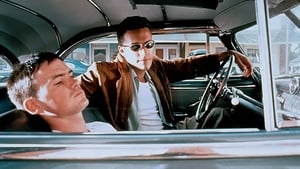
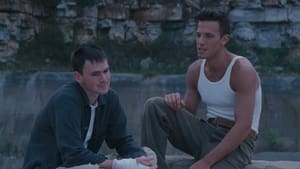
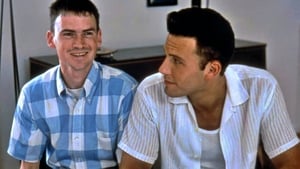
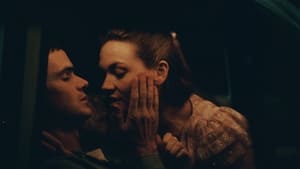
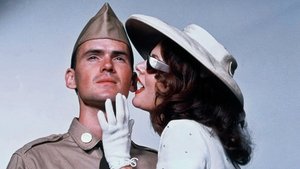
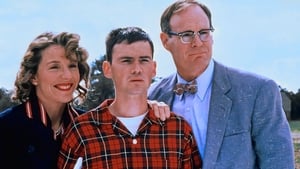
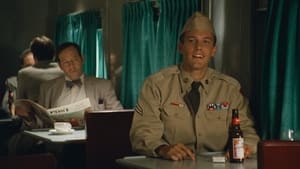
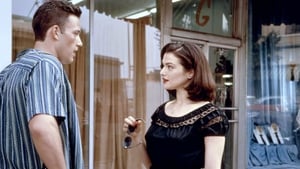
Korean War--era veterans and ex-classmates "Gunner" Casselman and "Sonny" Burns reunite upon their return home. Gunner, who spent the war years abroad, is trying to convince his mother that his gal Marty is good enough for him, while Sonny, who was stationed stateside, is torn between loyal Buddy and tempting Gale Ann. As they commiserate, the men realize that they're outgrowing the lives they lived before the war.
**_Escaping the shackles of religious legalism_**
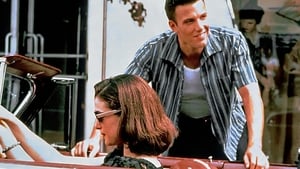
In 1954, two 24 years-old men return to Indianapolis after the Korean War (Jeremy Davies and Ben Affleck). It turns out they went to the same school, but frail Sonny was a shy writer for the school paper whereas studly Gunner was popular. They for
... m a lasting bond as they drink and chase women (Amy Locane, Rachel Weisz and Rose McGowan).
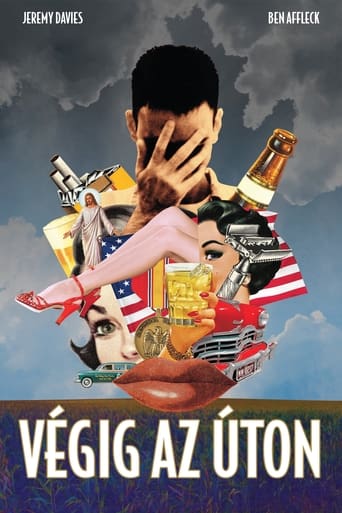
"Going All the Way" (1997) is a drama based on Dan Wakefield’s 1970 somewhat autobiographical novel about facing the challenges of adulthood in the early 50s; he also wrote the screenplay. This happened to be director Mark Pellington’s feature film debut, who would go on to helm “The Mothman Prophecies” five years later.
Naturally, the focus is on Sonny (Davies) and his coming-of-age in his early 20s. As such, there are some adult-oriented topics, which can be cringe-inducing, often illustrated with a creative sense of humor. I’m talking about subjects like masturbation and performance anxiety. To be expected, there are also scenes involving tame nudity and sexual intercourse (just a heads up).
Three main themes are tackled. First is the friendship of Sonny and Gunner, which is akin to Barney Rubble and Fred Flintstone. For instance, the best man at my wedding would be my “Barney.” There’s something about these types of friendships that profoundly inspire both individuals and so they are lasting in nature.
Secondly, there’s the issue of sterile legalism, the religious variety, which actually isn’t genuine Christianity, but rather a lifeless counterfeit with a garnishment of Christian décor. This is what drives Sonny to atheism in the movie and Wakefield in real life. Sadly, no positive depiction of a believer is offered as a counterbalance, which was effectively (and wisely) done in movies like “The Mist” and “The River Murders.”
In regard to the ‘m’ word issue, Genesis 38:8-10 is wrongly cited since Onan’s offense had nothing to do with masturbation, but rather his refusal to fulfill his Hebraic duty in perpetuating his brother’s line of descendants. This common error actually fits in the movie because legalistic religionists are infamous for misapplying Scripture.
Thirdly, the title of the film (and the book) isn’t a reference to the sexual usage of the phrase, but rather Sonny’s “going all the way” to break free from the constraints of religious legalism and becoming an atheist, as well as doing whatever was necessary to become a ‘successful’ writer.
Interestingly, the proceedings are pumped up with caricature and expressionistic visual tricks, which I found amusingly creative whereas others have disparaged. Whatever the case, it does create an issue for the viewer as far as discerning what’s real and what’s not.
As far as the female cast goes, Amy Locane as Sonny’s neighborhood girlfriend doesn’t fit the role because she’s just as beautiful in her own way as the dream girl he eventually meets (Rose McGowan). Speaking of McGowan, she’s in her dazzling prime here and never looked better. Weisz is notable in her ultra-cute way as well.
Some have criticized that the song during the opening credits came out in 1957 whereas the story is set in 1954, which they argue is anachronistic. Actually, it’s not. After all, who says that the score or soundtrack must fit the EXACT timeframe of the events in a film? For instance, Ennio Morricone’s score for “The Good, the Bad and the Ugly” is an iconic masterpiece, but no such music was released during the Civil War’s New Mexico Campaign of 1862. The song picked for the opening credits here was used simply to establish the general timeframe of the mid-50s. Only if this song had played on the radio in a particular scene would it be anachronistic.
At the end of the day, this movie can be appreciated as an amusing psychological study of ONE PERSON’s experiences becoming an adult in mid-50s’ America. It shouldn’t be viewed as an ideological manifesto.
It runs 1 hour, 43 minutes, and was shot in Indianapolis.
GRADE: B-