
The Jolson Story
The Music... The Magic... The Times... of America's Greatest Entertainer.
1946 | 128m | English
Popularity: 0.5 (history)
| Director: | Alfred E. Green |
|---|---|
| Writer: | Harry Chandlee, Andrew Solt, Stephen Longstreet |
| Staring: |


| At the turn of the 20th century, young Asa Yoelson decides to go against the wishes of his cantor father and pursue a career in show business. Gradually working his way up through the vaudeville ranks, Asa — now calling himself Al Jolson — joins a blackface minstrel troupe and soon builds a reputation as a consummate performer. But as his career grows in size, so does his ego, resulting in battles in business as well as in his personal life. | |
| Release Date: | Oct 10, 1946 |
|---|---|
| Director: | Alfred E. Green |
| Writer: | Harry Chandlee, Andrew Solt, Stephen Longstreet |
| Genres: | |
| Keywords | |
| Production Companies | Columbia Pictures |
| Box Office |
Revenue: $0
Budget: $0 |
| Updates |
Updated: Jan 19, 2026 Entered: Apr 26, 2024 |



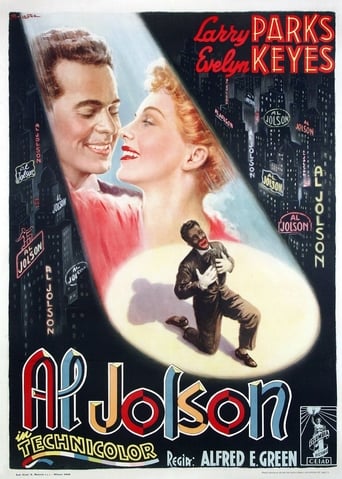



| Name | Character |
|---|---|
| Larry Parks | Al Jolson |
| Evelyn Keyes | Julie Benson |
| William Demarest | Steve Martin |
| Bill Goodwin | Tom Baron |
| Ludwig Donath | Cantor Yoelson |
| Scotty Beckett | Asa Yoelson |
| Tamara Shayne | Mrs. Yoelson |
| Jo-Carroll Dennison | Ann Murray |
| John Alexander | Lew Dockstader |
| Ernest Cossart | Father McGee |
| Lilian Bond | Woman (uncredited) |
| Frank Baker | Audience Member (uncredited) |
| Franklyn Farnum | Man in Audience (uncredited) |
| Bess Flowers | Woman in Audience/Nightclub Patron (uncredited) |
| Sam Harris | Nightclub Patron (uncredited) |
| Edwin Maxwell | Oscar Hammerstein (uncredited) |
| Frank McLure | Party Guest (uncredited) |
| Harold Miller | Night Club Patron (uncredited) |
| Larry Steers | Nightclub Patron (uncredited) |
| Brick Sullivan | Audience Member (uncredited) |
| Will Wright | Sourpuss Movie Patron (uncredited) |
| Raoul Freeman | Audience Member (uncredited) |
| Rudy Germane | Audience Member (uncredited) |
| Al Jolson | Singing Voice / Al Jolson (uncredited) |
| Stuart Hall | Audience Member (uncredited) |
| Name | Job |
|---|---|
| Joseph Walker | Director of Photography |
| William A. Lyon | Editor |
| Harry Chandlee | Adaptation |
| Andrew Solt | Adaptation |
| Stephen Longstreet | Screenplay |
| Stephen Goosson | Art Direction |
| Walter Holscher | Art Direction |
| Louis Diage | Set Decoration |
| William Kiernan | Set Decoration |
| Clay Campbell | Makeup Artist |
| Helen Hunt | Hairstylist |
| Robert J. Schiffer | Makeup Artist |
| Alfred E. Green | Director |
| Sidney Buchman | Additional Writing |
| Jean Louis | Costume Design |
| Morris Stoloff | Original Music Composer |
| Name | Title |
|---|---|
| Sidney Skolsky | Producer |
| Gordon Griffith | Associate Producer |
| Sidney Buchman | Producer |
| Organization | Category | Person | |
|---|---|---|---|
| Academy Awards | Best Actor | Larry Parks | Nominated |
Popularity History
| Year | Month | Avg | Max | Min |
|---|---|---|---|---|
| 2024 | 4 | 4 | 8 | 1 |
| 2024 | 5 | 5 | 8 | 2 |
| 2024 | 6 | 3 | 7 | 1 |
| 2024 | 7 | 5 | 8 | 2 |
| 2024 | 8 | 4 | 6 | 2 |
| 2024 | 9 | 5 | 13 | 1 |
| 2024 | 10 | 3 | 6 | 1 |
| 2024 | 11 | 3 | 10 | 1 |
| 2024 | 12 | 3 | 5 | 1 |
| 2025 | 1 | 3 | 6 | 1 |
| 2025 | 2 | 2 | 4 | 1 |
| 2025 | 3 | 1 | 2 | 1 |
| 2025 | 4 | 1 | 1 | 1 |
| 2025 | 5 | 1 | 1 | 1 |
| 2025 | 6 | 1 | 1 | 1 |
| 2025 | 7 | 0 | 0 | 0 |
| 2025 | 8 | 1 | 2 | 0 |
| 2025 | 9 | 2 | 3 | 1 |
| 2025 | 10 | 3 | 4 | 3 |
| 2025 | 11 | 3 | 3 | 2 |
| 2025 | 12 | 1 | 3 | 0 |
| 2026 | 1 | 2 | 13 | 0 |
| 2026 | 2 | 0 | 0 | 0 |
| 2026 | 3 | 0 | 1 | 0 |
Trending Position
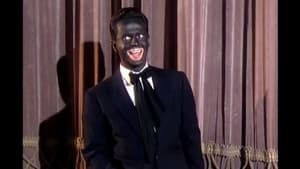
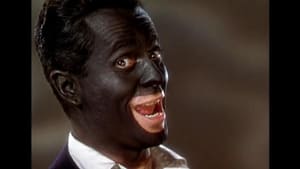
I can’t say I knew much about Al Jolson aside from his “Mammy”, and I’m not sure I really know that much more now. Larry Parks does, however, deliver quite engagingly as the young Jewish lad who was spotted by “Steve” (William Demarest) and in spite of strong objection from his father (Ludwig Donath ... ) takes to the boards. He is a talented lad, no doubt about that, and so is quickly offered bigger and better parts that challenge his loyalties and priorities whilst offering him all the trappings of stardom. When he encounters aspiring Ziegfeld gal “Julie” (Evelyn Keyes), she brings an whole new dimension to their lives as she hopes to enjoy success in a slightly different fashion that will mean retirement to a new house in the country. The question for Jolson, though, is whether he can be satisfied with this more sedentary existence or whether the smell of the greasepaint and the roar of the crowd will prove too much for him to resist. It’s all perfectly watchable fayre in the vein of so many of these 1940s biopics that selectively and creatively re-write history but with a solid musical score underpinning a story of it’s time, it is still watchable enough as an illustration of just what did entertain folks desperate for diversion after years of WWII austerity. It’s also quite interesting that much is made of the “Blackface” characterisation here and yet so many of his own contemporary African Americans acknowledge that this very activity, considered racist nowadays, actually served to help acclimatise a considerable number of the not so tolerant American citizenry to the idea that black people were every bit as equal and talented as their fairer skinned compatriots. Moreover, many are ready to certify that Jolson didn’t have a racist bone in his body. Could this be an early conduit for more enlightened thinking?