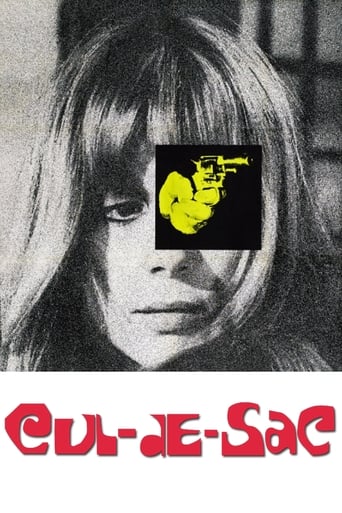
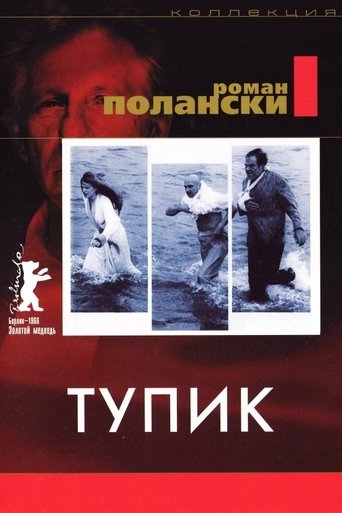
Cul-de-sac
Sometimes there’s nothing left to do but laugh!
1966 | 112m | English
Popularity: 2 (history)
| Director: | Roman Polanski |
|---|---|
| Writer: | Gérard Brach, Roman Polanski |
| Staring: |


| On the run and in search of help, two wounded gangsters find refuge in the secluded castle of a feeble man and his wife; however, under the point of a gun, nothing is what it seems. | |
| Release Date: | Jun 17, 1966 |
|---|---|
| Director: | Roman Polanski |
| Writer: | Gérard Brach, Roman Polanski |
| Genres: | |
| Keywords | age difference, island, married couple, castle, refrigerator, isolated house, northumberland |
| Production Companies | Compton Films, Tekli British Productions |
| Box Office |
Revenue: $0
Budget: $135,000 |
| Updates |
Updated: Jul 30, 2025 Entered: Apr 13, 2024 |



![Cul-de-sac (1966) Original Trailer [FHD]](/extra_thumbs/oqCrt-pYCQA.jpg)







| Name | Character |
|---|---|
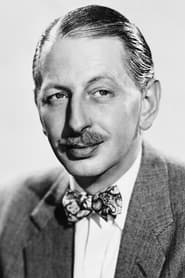
| Lionel Stander | Richard |
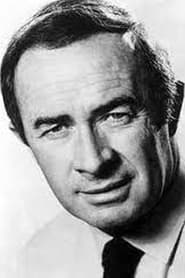
| Donald Pleasence | George |
| Françoise Dorléac | Teresa |
| Jack MacGowran | Albie |
| Iain Quarrier | Christopher |
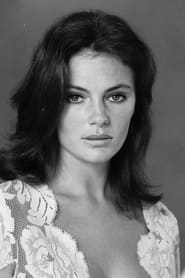
| Jacqueline Bisset | Jacqueline |
| Renée Houston | Christopher's Mother |
| William Franklyn | Cecil |
| Geoffrey Sumner | Christopher's Father |
| Robert Dorning | Philip Fairweather |
| Marie Kean | Marion Fairweather |
| Trevor Delaney | Nicholas |
| Name | Job |
|---|---|
| Krzysztof Komeda | Original Music Composer |
| Alastair McIntyre | Editor |
| Ted Sturgis | First Assistant Director |
| Voytek | Production Design |
| George Lack | Art Direction |
| Alan Brownie | Makeup Artist |
| David Campling | Sound Editor |
| Gérard Brach | Writer |
| Roman Polanski | Writer, Director |
| Gilbert Taylor | Director of Photography |
| Name | Title |
|---|---|
| Gene Gutowski | Producer |
| Michael Klinger | Producer |
| Tony Tenser | Producer |
| Sam Waynberg | Executive Producer |
| Organization | Category | Person |
|---|
Popularity History
| Year | Month | Avg | Max | Min |
|---|---|---|---|---|
| 2024 | 4 | 11 | 20 | 7 |
| 2024 | 5 | 14 | 19 | 8 |
| 2024 | 6 | 13 | 20 | 8 |
| 2024 | 7 | 14 | 31 | 8 |
| 2024 | 8 | 11 | 24 | 7 |
| 2024 | 9 | 8 | 12 | 6 |
| 2024 | 10 | 10 | 21 | 5 |
| 2024 | 11 | 9 | 14 | 6 |
| 2024 | 12 | 9 | 14 | 5 |
| 2025 | 1 | 9 | 14 | 7 |
| 2025 | 2 | 7 | 10 | 3 |
| 2025 | 3 | 4 | 8 | 1 |
| 2025 | 4 | 2 | 2 | 1 |
| 2025 | 5 | 1 | 3 | 1 |
| 2025 | 6 | 1 | 2 | 1 |
| 2025 | 7 | 1 | 1 | 0 |
| 2025 | 8 | 1 | 2 | 0 |
| 2025 | 9 | 2 | 3 | 1 |
| 2025 | 10 | 2 | 3 | 0 |
| 2025 | 11 | 0 | 1 | 0 |
| 2025 | 12 | 1 | 3 | 0 |
| 2026 | 1 | 4 | 17 | 0 |
| 2026 | 2 | 1 | 3 | 0 |
| 2026 | 3 | 1 | 4 | 0 |
Trending Position
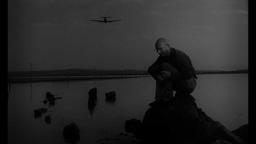
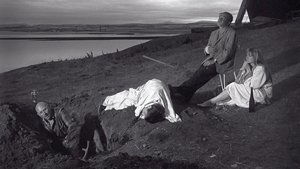
_**Mid-60’s art house flick is dramatically tedious, but has interesting themes**_ A diminutive artist (Donald Pleasence) lives with his much-younger French wife (Françoise Dorléac) in a castle on a tidal island in northern England. When a gruff gangster (Lionel Stander) shows up on their doorste ... p havoc ensues. Iain Quarrier, William Franklyn and a young Jacqueline Bisset show up for peripheral parts. "Cul-de-Sac" (1966) is one of Roman Polanski's early experiments, a freestyle B&W psychological crime dramedy that takes elements of “The Damned” (1963), “Touch of Evil” (1958) and “A Streetcar Named Desire” (1951) and mixes them with black humor and the theme of the later “Straw Dogs” (1971). Jack Nicholson cited it as his favorite film, which makes sense when you consider Nicholson’s “The Shooting” (1966). In tone, it’s the precursor to Altman flicks like “The Long Goodbye” (1973). There’s such an improvisational feel that one wonders what the point is? French girls are neurotic and promiscuous: British artists are wussies? Those who live by the gun will die by the gun? No matter how much a person tries to escape the world to focus on fulfilling his/her art (whatever that might be), the corruption of the world will come knocking on your door and might even share your bed? That even a finely cultured man will resort to his primordial nature if backed into a corner? The film obviously has its partisans, who deem it a masterpiece. There are some interesting technical things going on, like the 7.5 minute scene on the beach, which was one of the longest continuous sequences in cinema up to that point. But the characters are oddball and unlikable while the story is meandering and dramatically dull. Yet the locations, the cast and the themes are to die for, not to mention the eccentricities. The film runs 1 hour, 52 minutes, and was shot at Holy Island of Lindisfarne, off the coast of northeastern England. GRADE B-/C+